Auto
EV Road Trip Charging: Plan Stops, Time and a Backup
Plan an EV road trip around compatible chargers, realistic arrival charge, verified access and a backup stop within reach.
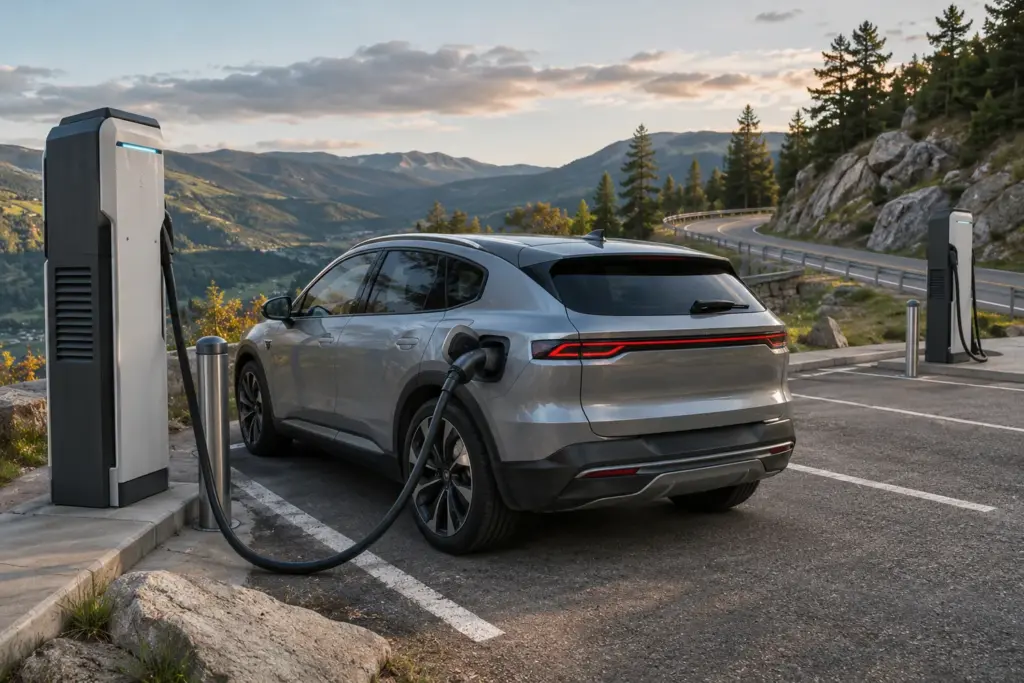
Plan your EV road trip with a primary charger, a compatible backup and an arrival reserve. Check both stops against the vehicle’s connector and the operator’s live access information shortly before leaving. A dot on a map tells you where a station was listed. It does not tell you whether the bay is available, the site is open or your payment method works there.
- Primary charger
- 155 km
- Backup charger
- 175 km
- Distance to the planned reserve
- 180 km
Check the reserve again using actual consumption as you drive.
Calculate the margin to the backup
Suppose a car with 60 kWh of usable capacity starts a leg at 80% and you want to arrive with 20%. That leaves 36 kWh to use. At an assumed 20 kWh/100 km, this is 180 km before using the planned reserve. A charger at 155 km leaves 25 km of margin under those assumptions. A backup at 175 km uses nearly all of it. Choose an earlier stop if the route has climbs, headwinds or higher consumption than you budgeted for.
Budget the time you will actually spend
A 150 kW station rating does not mean the vehicle receives 150 kW throughout its stay. Both vehicle and station can limit power, and the charging rate can change as the battery fills. Compare the car’s published time across the same state-of-charge interval and allow time for leaving and rejoining the road, parking and possible queues.
Save the network’s payment instructions and verify access hours. Know the next available station before you pass the last one you trust. At the destination, find out whether slower overnight charging can cover the start of the return trip.
Further reading
VORAVUE Verify
Evidence: A · Primary-source confirmed
DOE sources describe charging equipment and networks. The route and charging example is hypothetical, and real station status changes.